



Summer House Furniture Ideas: Start Here
Published: 13.11.2026 / Last updated: 13.11.2026
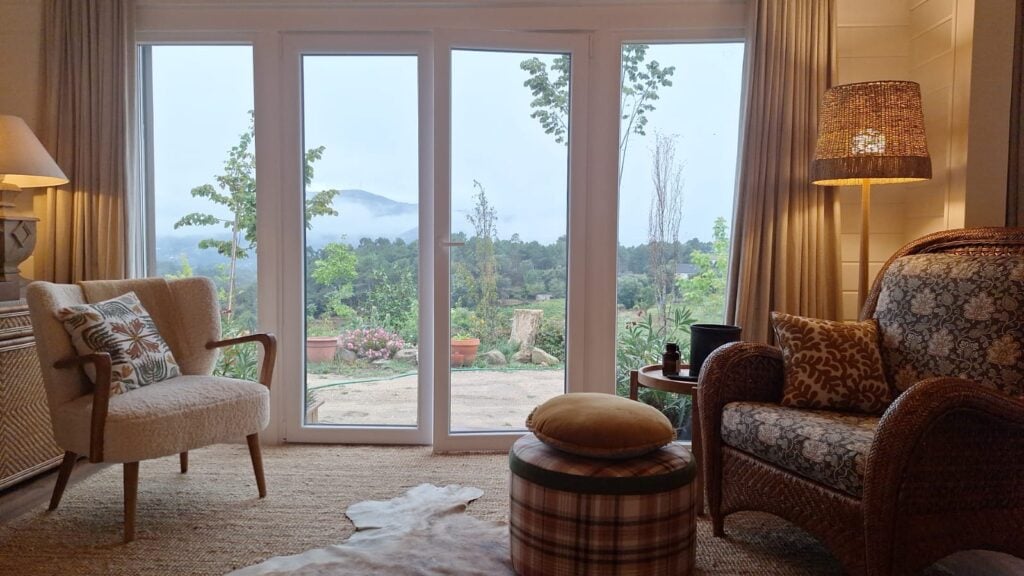
Looking up summer house furniture ideas? Designing the interior of your summer house is one of the most rewarding and fun parts of getting one set up: looking at online galleries or Pinterest, watching videos on YouTube, maybe even going old-school and browsing a few interior design books. The research is the part that most people enjoy – until it gets overwhelming. This is why we’ve put together this helpful guide with real photos from Summerhouse24 customers.
We cover some of the basics you should consider when you start planning your summer house furniture. Learn about what to choose, how to make it fit in small and corner summer houses, and how folding and multi-functional furniture can make one small space do several jobs.

Start with how you’ll use the summer house


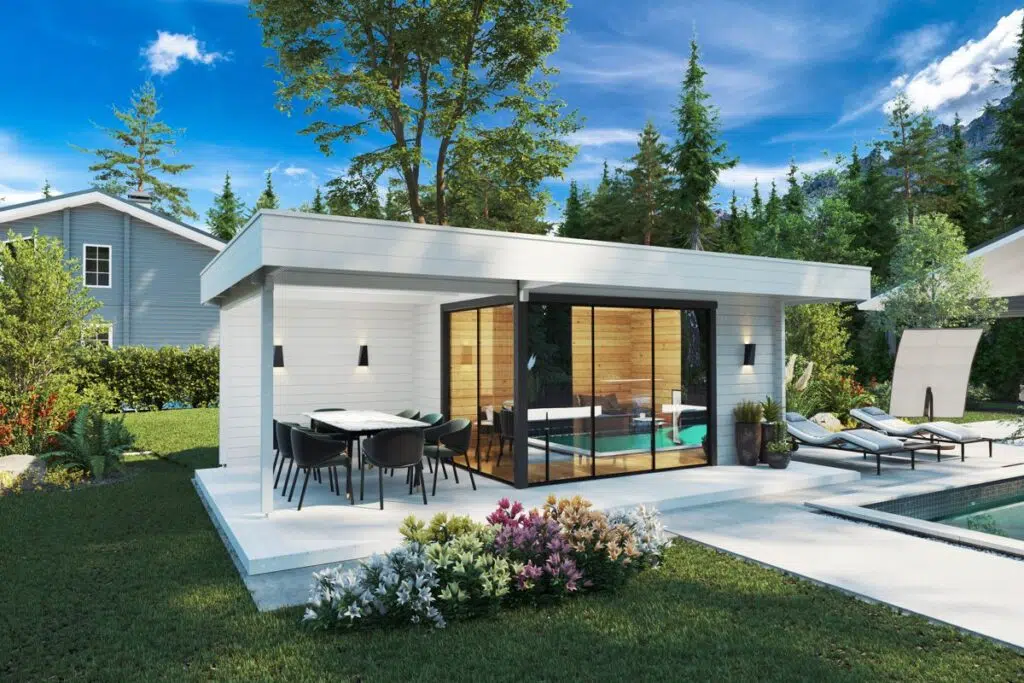
This is an obvious one and it’s always the first step. You’ll want to think about how you’re going to be using the summer house. Is it going to be a quiet space for recharging? Or a lively garden bar for entertaining?
The good news is that in many cases you don’t need to choose. You may think of one use for your summer house, but after a while, find it also fits a completely different purpose. For example, a room initially planned as a teen den may be the perfect place to take work calls when the summer house is not in use.
Still, starting with one primary use is typically the best idea, depending on how much space you have available. If you have a large summer house with a spacious central room or even 2-3 separate rooms, you can immediately plan for different uses (either one per room or one per zone).
Here’s a helpful list of the core furniture pieces you should choose based on the main function of the room:
- Lounge or reading room: a sofa and armchair or two armchairs, a side table, a reading light.
- Home office: a desk, an ergonomic chair and storage within arm’s reach.
- Guest room: a daybed or sofa bed and a dresser or shelving for your guest’s things.
- Hobby or craft room: a worktop, shelving or chest of drawers and an ergonomic stool or chair.
- Dining or entertaining: a table for four, and comfortable seating.
For the look and feel (themes, colours and styling), see our summer house decorating ideas.
How can one small summer house be used in several ways?
Even a small summer house can easily be used in many ways with very little furniture. For example, a simple setup of a 2-seater sofa, an armchair, a pouf, a side table, a small corner shelf, a foldable table attached to the wall and a TV mounted in the corner works as:
- a hangout space for older children who want somewhere of their own
- a quiet place to read or watch a film, and
- a place for work calls
If you’re only using the summer house for work occasionally, you don’t need to choose the desk and chair as your main summer house furniture elements. A simple folding table you can attach to one of the walls does the trick on a reasonable budget. If you have some woodworking experience, it can also be an easy DIY project, though you’ll likely be able to find one of these easily online for a reasonable price (look under garden furniture).
Another option is to keep foldable furniture tucked away in a corner, attached shed or even the house itself – it all depends on what is most comfortable for your situation.
Solid timber, double glazing, no middleman. Just a better summer house for the money.
5-star rating · Direct from the factory · 20+ years of experience


How do you measure a summer house for furniture?
There’s really no significant difference compared to a house. To measure a summer house for furniture, note down the internal floor space, the door openings and distance from walls, the window positions and the ceiling height before you buy anything. If you’re putting any furniture below the windows, measure how much space you have available instead of eyeballing it – this is an easy one to get wrong.
- Internal floor space. You may not need to measure the internal space if it’s already included with your summer house plans. When you only have external measurements, make sure to measure along the inside walls too.
- Door width and height. Your dream sofa is no use if it can’t get through the doors. Measure the opening, and check whether the furniture you’re planning comes in several pieces or whether parts can be removed for transportation (for the sofa, the legs or backrest).
- Window and door positions. Furniture below a window or in the path of a door can take up more room than it seems on first glance.
- Ceiling height, if you’re planning tall shelving.
To be extra sure, mark each piece out on the floor with masking tape. It only takes a few minutes and will give you a good sense of whether you’ll have enough space to move around. If you have any empty cardboard boxes or other items, you can also use them to give height to the ‘furniture’. This is helpful if you’re not quite sure whether adding that shelving near the door actually works or you’ll just end up bumping into it when you’re in a rush.
Seating ideas for a summer house
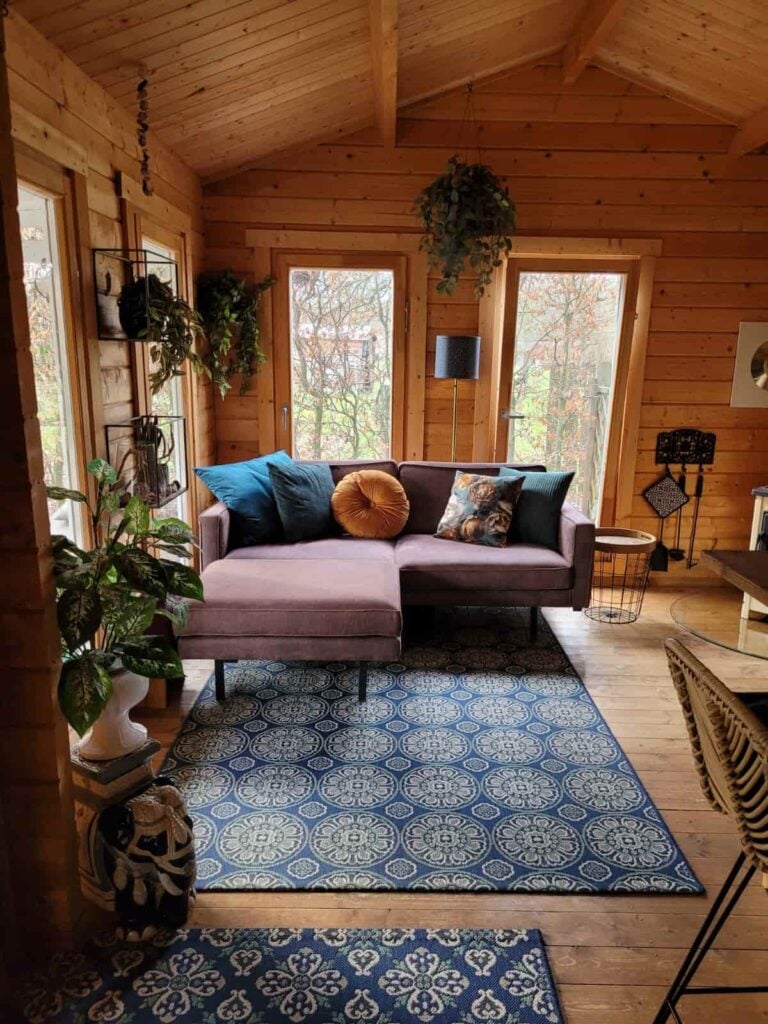
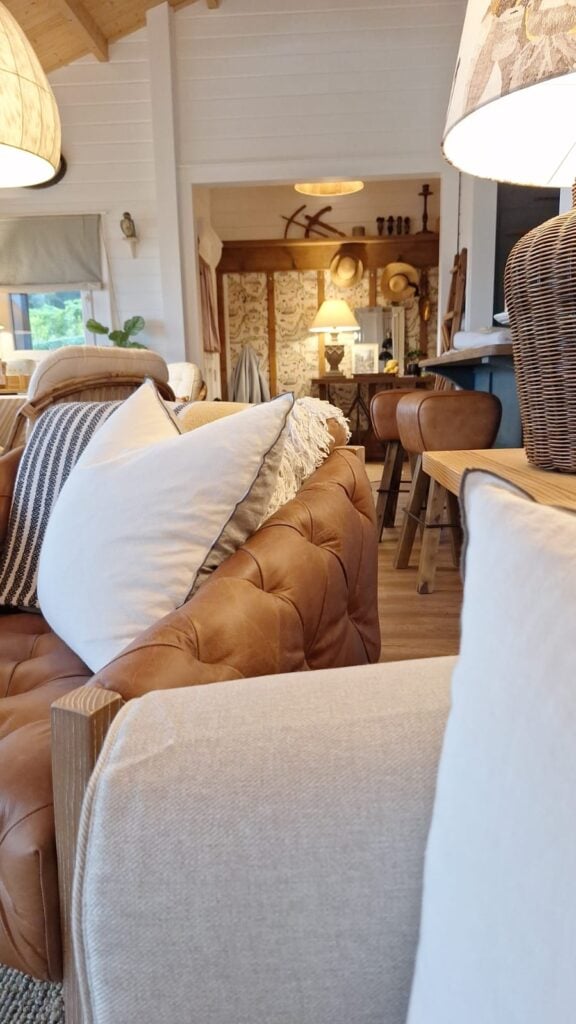
2-seater sofas
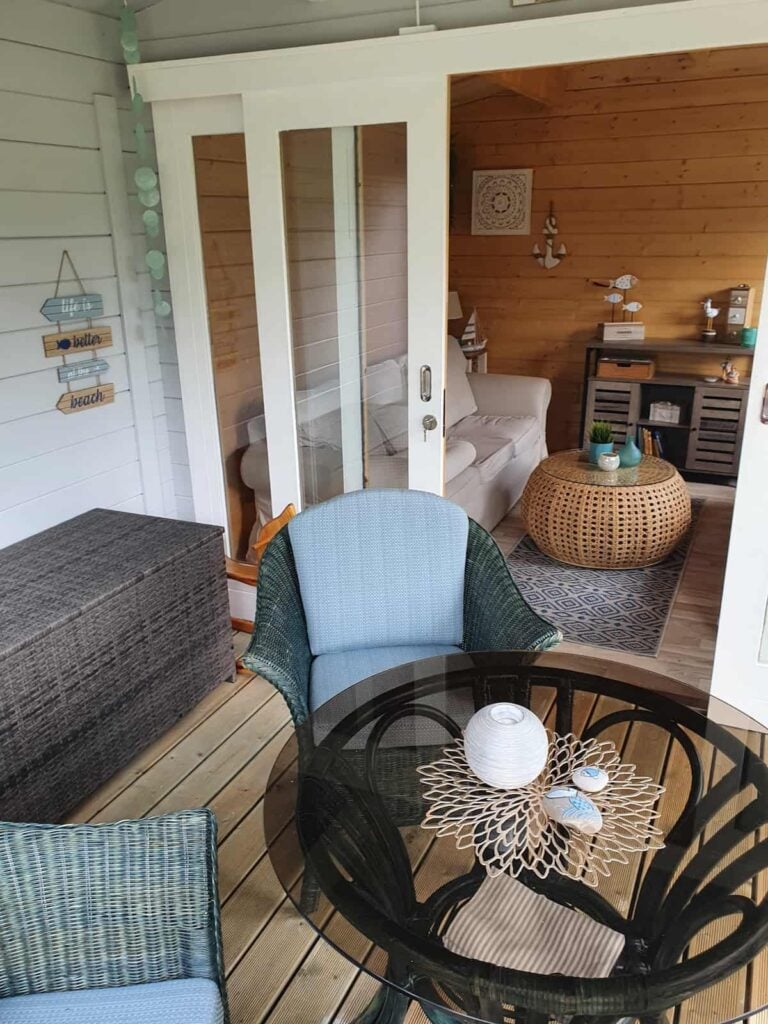
A 2-seater sofa can be the most practical main seat for small and mid-sized summer houses. Standard 2-seaters usually measure around 140–180 cm wide and 80–100 cm deep. Compact or “apartment” sofas with slim arms give you the same seat width in a smaller footprint.
Corner sofas
A corner sofa gives you the most seating per square metre, as long as the room has two clear walls meeting at a corner. In a five-sided corner summer house, the corner of the two back walls is usually the most natural placement for the sofa. Facing the doors, it’s the perfect place to take in the views from the garden.
Sofa beds and daybeds
A sofa bed or daybed gives you seating by day and a bed by night (or for an afternoon nap). Measure the length of the sofa bed when it’s open. If you’re using a coffee table with your sofa bed, make sure the room has a little nook you can tuck it away to once the sofa opens into a bed.
Armchairs, pouffes and floor cushions
Armchairs are easier to arrange than a sofa in an angled or awkward room. Pouffes and floor cushions add extra seats when you have guests, and tuck away when you don’t.
Tables and workspaces

The table you need depends on the main use of the room. A coffee table anchors a lounge layout, and a pair of nesting side tables does the same job while freeing up floor space when you separate them. For a garden office, choose a desk deep enough for a laptop and a notebook side by side, and place it at right angles to the window to cut glare.
Furniture for small and corner summer houses
Small and corner summer houses work best with furniture that follows the shape of the room. Try to keep the floor as clear as possible, since there isn’t much to play with.
- Benches along the back walls. In a corner summer house, benches with built-in storage along the two back walls give you seating and storage in one.
- Keep the path to the angled front wall clear. In a five-sided corner summer house, the doors are usually in the angled front wall. Place your main furniture along the back walls and leave a clear path from the doors.
- Use the corners. A small corner shelf turns unused space into clever storage. A TV mounted in a corner keeps the floor and walls free, and suits an angled layout.
- Make the room feel bigger. Light-coloured fabrics and furniture with visible legs show more floor, which makes a small room feel more open.
- Check corner sofas arm by arm, as above.
As an example, Fargo A from Summerhouse24 is a 3.5 x 3.5 m corner summer house with 12 m² of floor space, built from tongue and groove Nordic spruce. That’s enough for a compact corner sofa along the back walls, a coffee table, and either a small desk or an armchair by the window, with a clear path from the doors.
Folding and multi-functional furniture, covered below, gets even more out of a small space.
Think your garden’s too small? A corner is all you need.


Storage that doesn’t eat floor space
The best summer house storage goes up the walls rather than across the floor:
- Wall-mounted shelves above head height for books, plants and baskets.
- Under-seat storage in a bench or ottoman.
- Hooks and rails on the back of the door or along one wall.
- A narrow console table against a wall, with baskets underneath.
Folding furniture for flexible, everyday use
Folding furniture is the most affordable way to make a small summer house work harder, because it gives you extra surfaces and seats only when you need them.
- Wall-mounted folding table. A table that folds down from the wall is just right for a morning coffee, breakfast or an hour of work, then folds flat to give you the floor back.
- Folding chairs. Keep two in the summer house, or in the house, for when you have company. Seat cushions make them comfortable for longer visits.
- Pop-up or folding table. If you’ll only use it occasionally, such as for the odd work call, store it in the house and bring it out when you need it.
Is multi-functional furniture worth it for a summer house?
Multi-functional, or transforming, furniture is worth it if you plan to use the summer house regularly for more than one purpose and are happy to invest in it. Examples include sofa beds, beds that fold up to reveal a desk, and wall beds.
These pieces suit people who host family or guests often, or who want the summer house to feel like an extra room of the house. They are, however, considerably more expensive than standard furniture, and they can add a lot to the overall budget. If you’ll only use the second function now and then, folding furniture is usually the more sensible choice.
Choosing furniture that copes with summer house conditions
Furniture for an uninsulated summer house
An uninsulated summer house needs furniture that copes with changes in temperature and humidity. Timber buildings warm up quickly on sunny days, cool down at night, and get more humid in autumn and winter. Synthetic rattan, treated hardwood and metal frames all handle these conditions well, as do cushions with removable, washable covers. Over winter, bring soft furnishings indoors or store them in sealed bags.
Furniture for an insulated summer house
An insulated summer house can take the same upholstered furniture you’d have indoors, because insulation keeps temperature and humidity steadier.
Lighting and finishing touches
Lighting changes how a summer house feels more than any other single item. Table lamps and string lights make the room cosy in the evening, and a good desk lamp makes it a place you can work. Our guide to summer house and log cabin lighting covers mains and battery options. For entertaining, a small corner bar works well in a summer house, and our man cave and garden bar ideas are full of inspiration.
FAQ
The best furniture for a summer house is typically something with lightweight construction and some weather resilience like lightweight wood, rattan or even cane. There are no hard rules though, if it’s a summer house that is in use frequently (insulated and heated), you can use any kind of furniture that you’d normally use indoors.
Compact pieces that do more than one job are often the best choice here. That means a 2-seater sofa, a pouf that doubles as a seat or footrest, wall-mounted shelves and folding furniture. In a corner summer house, a corner sofa or built-in benches along the back walls are great options.
In an insulated summer house, yes, but keep an eye on the moisture levels (see the next answer for more tips). In an uninsulated one, frames made from rattan, metal or treated hardwood will likely be fine, but bring cushions and soft furnishings indoors, or store them in sealed bags, to protect them from damp.
Make sure to ventilate regularly by opening doors and windows. You want to avoid having high moisture for extended periods, so installing a cheap hygrometer can help you keep an eye on the moisture – around 50% is the highest you’ll want to go. It will be easier to avoid mould if you have an insulated summer house, but even then, you’ll most likely want to heat the place up for a while every week or two to drive out the moisture. Another alternative is to put a moisture absorber in the room.
You’ll most likely find the best deals with big sellers like IKEA, B&Q, etc or by buy buying second-hand from online marketplaces.
Categories:
Inspiration
Most “golf sim room ideas” content is a scroll of pretty photos with no explanation of why any of it works. This one’s different: every idea here is tied to a functional reason, so you can actually borrow it rather than just admire it. Before the ideas: the one thing most inspiration content skips Scroll…

Every house has a spot that never quite becomes yours. The spare room turns into a dumping ground, the garage fills up with everything except the car, and the sofa corner you claimed for match days gets colonised the second anyone else wants the TV. A garden man cave solves that in one move: a…

A summer house is one of the few rooms you cross the garden to reach, and that short walk should change what it is. It isn’t overflow space for the house. At its best it sits slightly apart, somewhere the light, the quiet and a closed door do most of the work before you’ve added…

A summer house or log cabin earns its keep long after summer ends – as a garden office, a gym, a quiet snug, a bar for entertaining, a guest room or somewhere to escape the house for an hour. But a building you can only use in daylight is a building you use half the…
Want to discuss over phone. Let us call back to you
If you need any additional info regarding any product, please fill in the below form and we will get back to you, usually the same or next working day.
Have any questions regarding some product?
If you need any additional info regarding any product, please send us your questions.