




Tiny She Shed Interiors: Big Ideas For Small Spaces
Published: 25.11.2026 / Last updated: 25.11.2026
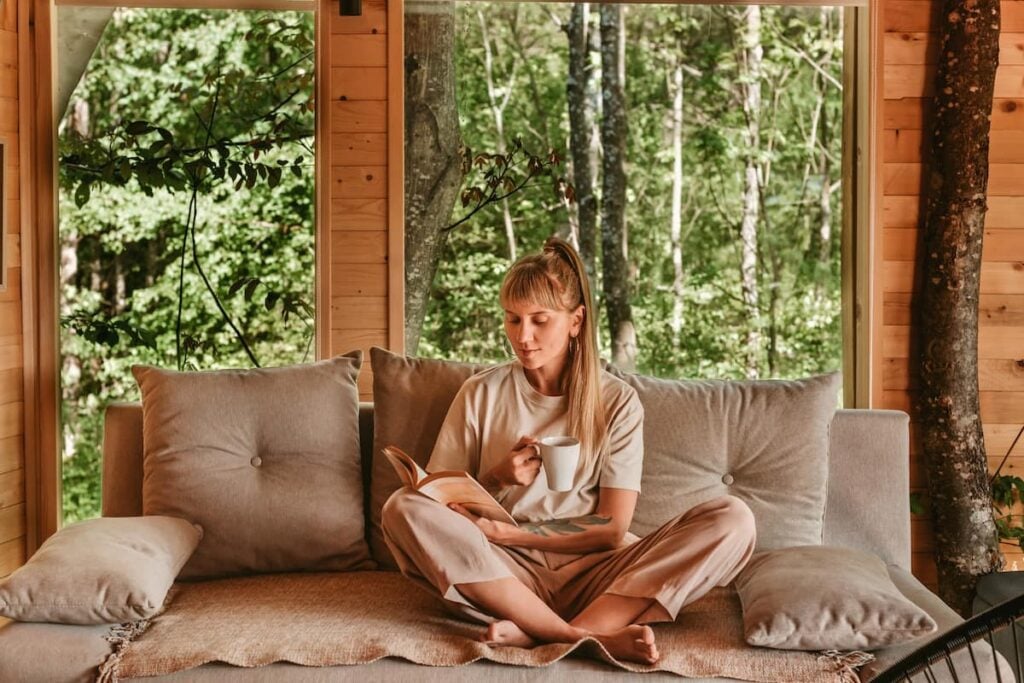
Looking for tiny she shed interiors inspiration? We’ve got you covered.
The outside of a she shed is typically the easy part. Paint it a soft green or pastel pink, add a window box with some flowers, and it already looks dreamy.
The inside is where most people may feel… a bit stuck. This is typically because a garden building gives you a small, square space and no obvious place to start. It’s easy to feel overwhelmed when you don’t have clarity on what the first thing to do is.
But if you flip that on it’s head, a small footprint can actually be a design advantage. When you have a garden room of just 6 or 8 square meters (19-20 square feet), it usually has just one main function. That rules out quite a few decisions a larger and more complex space would need.
And, it may sound like a cliché, but constraints often do let people’s creativity take the centre stage. You might even surprise yourself with the clever solutions or interesting designs you come up with. But lets start at the beginning…
Table of contents
What is your she shed for?
Deciding this is the first step and where clarity starts. A small she shed that tries to be a studio, a home office, a guest room and a plant store may not work well as any of them. Before looking at a paint chart, write down the one main activity you want to use the space for. Then, a second, smaller one that also fits into the room.
Here’s a few common pairings:
- Craft or sewing, with a comfortable chair or sofa for planning (and napping or reading your favourite books, of course)
- Painting or pottery, with shelving for drying and storage
- Yoga and stretching, with a cupboard to store away everything when you’re done
- Somewhere to sit with a coffee and see the garden, with a corner for potting up seedlings
If you aren’t sure of the main use, take some time to sit or lay down and imagine how you’d use the space. Put on your favorite tunes and enjoy the process of dreaming up your best space.
Tiny she shed interiors: working with six to nine square metres
Lets have a closer look at some design principles and clever ideas for your tiny she shed interior.
The three-zone layout for small buildings
Most small garden rooms are a simple rectangle with the door at one end. One of the easiest ways to figure out the layout is to think of it as these three zones:
The window zone. Here you’ll have ample light and you should position your main activity near it. This means putting your desk, chair or easel in the window zone, so you have good lighting and can enjoy the beautiful views outside.
The wall zone. This zone runs along the longest unbroken wall and is where you can use vertical storage. Placing shelving here doesn’t cost you floor space and keeps the middle of the room clear. If you’re planning for a couch, place it here and move the shelving.
The threshold zone. This is the metre or so by the door. Keep it almost empty: a hook rail, a small mat, somewhere to put a mug down. A small corner shelf may work well for storing bits and bobs, but opt for a design that isn’t bulky – something minimal would work best. Cramming this area will immediately make the already small building feel even smaller.
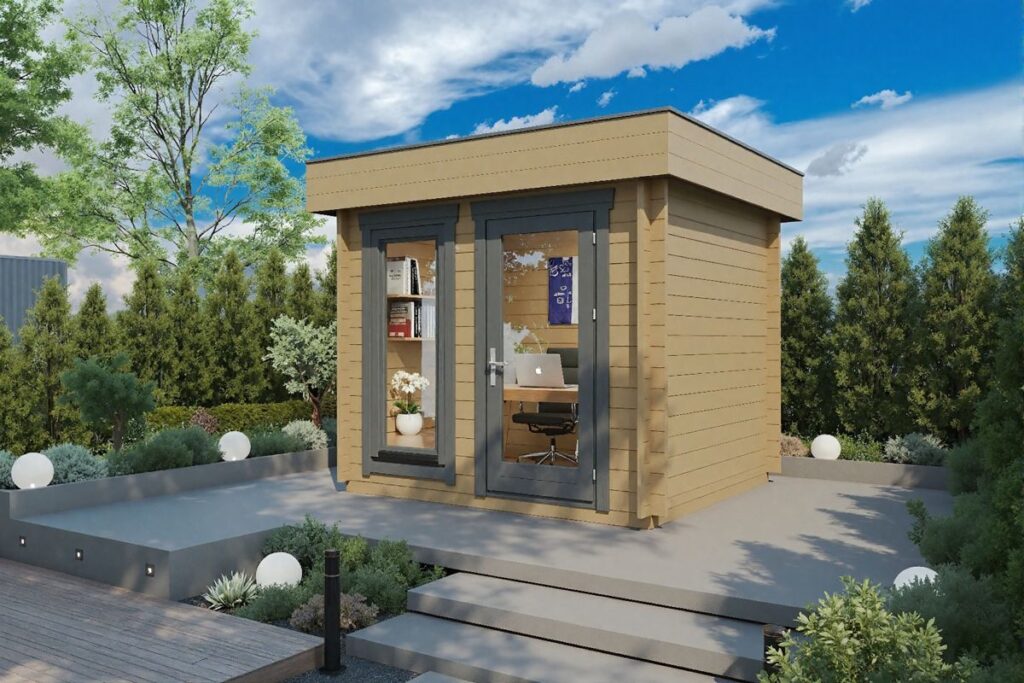
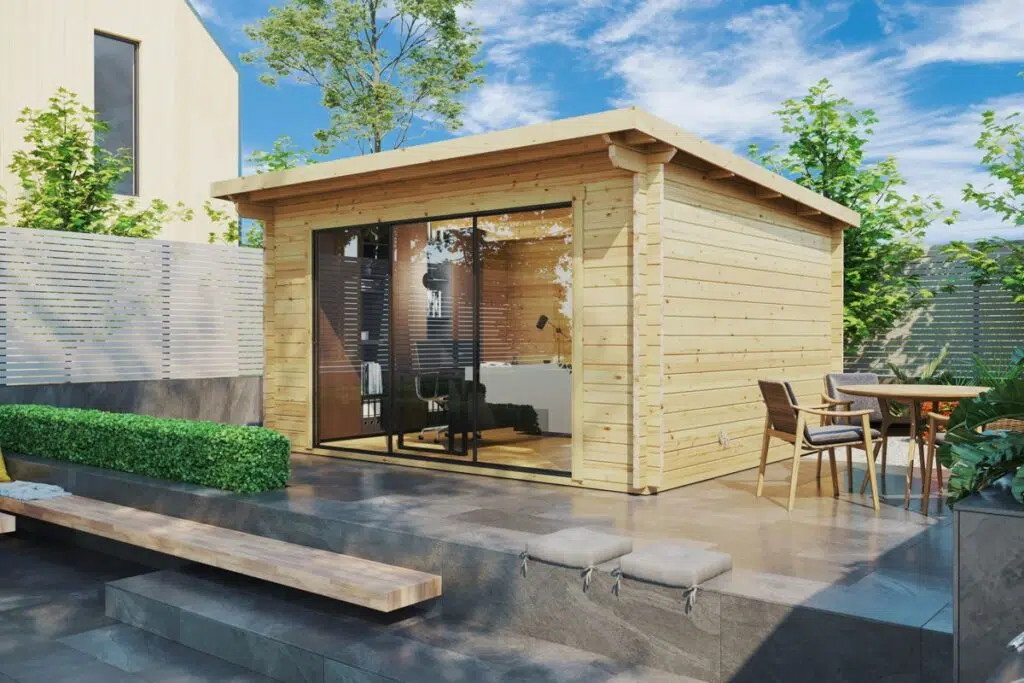
If your she shed has a corner position or an L-shaped plan, you can use the same 3-zone method. Our small garden rooms are laid out with this kind of single-purpose use in mind and are a great option if you’re looking for a she shed that lasts.


Clever interior design solutions for a small she shed
When you don’t have a lot of floor space, every piece of furniture does require a bit more consideration. Here’s a few tips that can really make a difference in how your she shed feels.
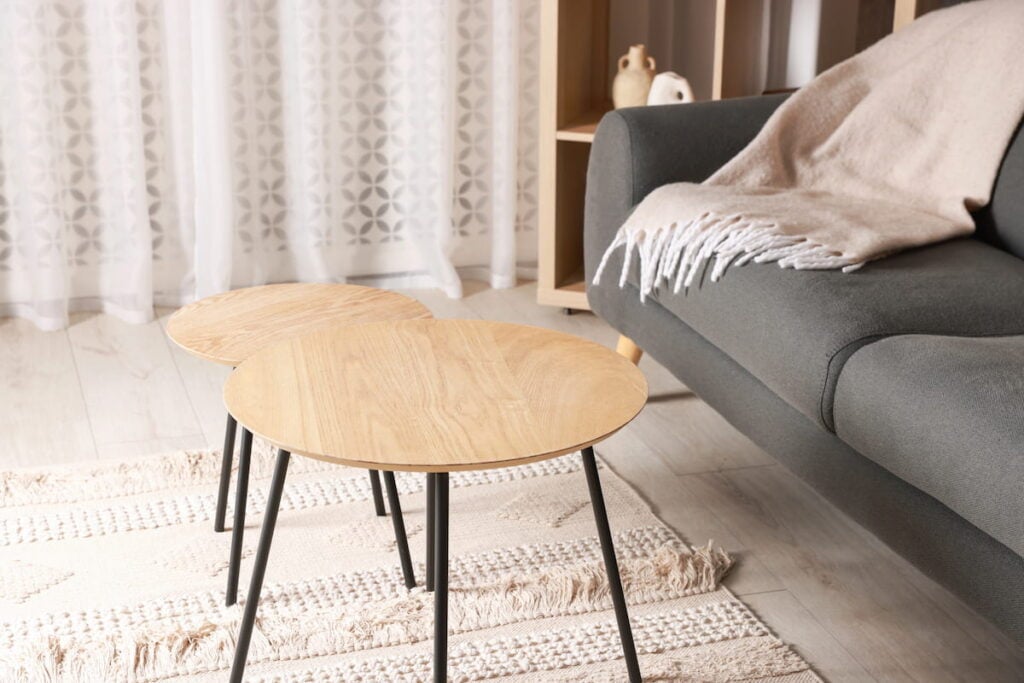
Furniture on legs. Seeing the floorboards continue underneath the sofa or cabinet makes the room feel larger. Furniture that extends to the floor has the opposite effect.
Shallow vertical storage. Shelves that are 20 to 25 cm deep can hold books, baskets and supplies without making the room feel crowded. Avoiding deep cupboards is generally a good idea – unless it’s essential for the rooms planned use.
One large mirror. Consider a mirror, if there’s space for it. Position it so that it reflects the window instead of facing it – this makes the room feel more spacious, doubling the perceived depth of the room.
Fold, stack and nest. Nesting side-tables (tip: use one as a side table and a second one as a foot rest), a drop-leaf table, a folding chair on a wall hook, can all be tucked away when not in use.
Use one colour on large surfaces. If you want your she shed to read as one continuous space (and therefore seem larger), use a single colour for the largest furniture items and surfaces in the room. This doesn’t mean that everything needs to be the exact same shade, but it does need to be close enough – think different shades of natural whites, light sand tones or even muted pastels. If you’re planning on hanging any art or decorative items, factor that into the picture.
Dark interiors will typically make the space feel smaller, but if you’re after a cozy hideaway, that might be the best approach for you. The same principle applies – stick to similar colours and tones for large surfaces.
Avoid high contrast. In such a small space, avoid using high contrasting colours which can make the room feel cluttered. If you’re worried the room will look dull, there’s an easy solution…
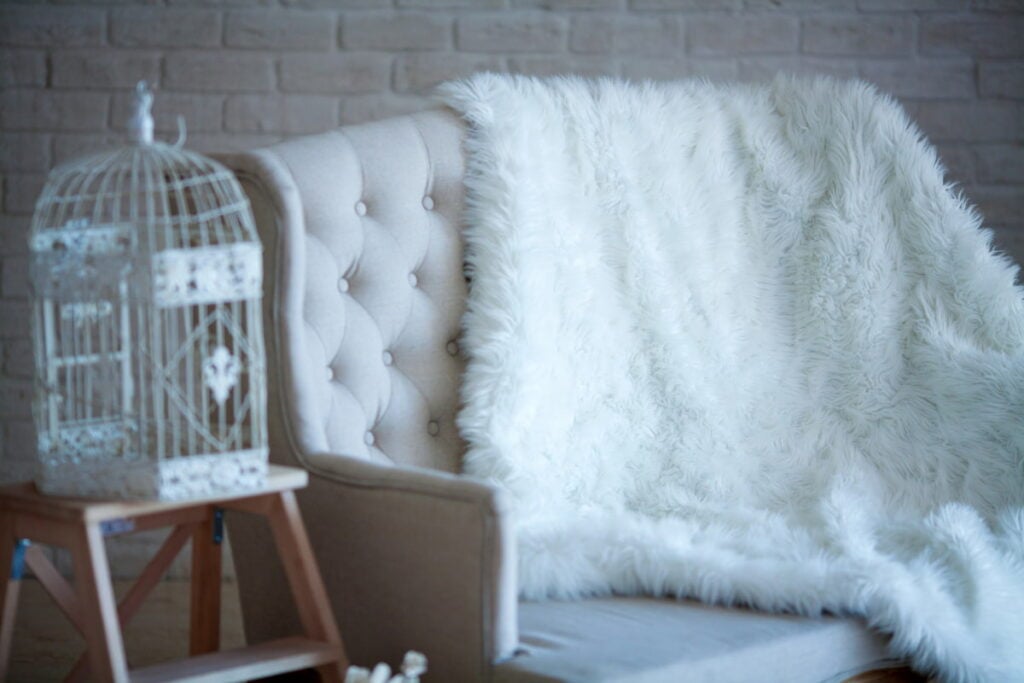
Add textures. Even a mostly beige room (which some love and others despise) can look very interesting when different materials are layered throughout the space. These could be different kinds of woven fabrics, faux or real fur, baskets, distressed furniture, crochet lace or chunky knit blankets, for example.
Interior ideas that cost very little
Here are a few of the best design ideas if you’re working with a small budget:
- Paint the inside of the door a different colour from the walls.
- Hang a curtain on a tension rod to hide open storage.
- Use a peg rail to get tools, bags and baskets off the floor.
- Add a second-hand rug rather than new flooring.
- Frame seed packets or plant prints rather than buying art.
- Swap plastic boxes for lidded baskets, which read as decoration rather than storage.
How do I make my tiny she shed functional?
All you really need to do is get some multi-functional furniture and utilise unused space in clever ways. Here’s some inspiration to get you started:
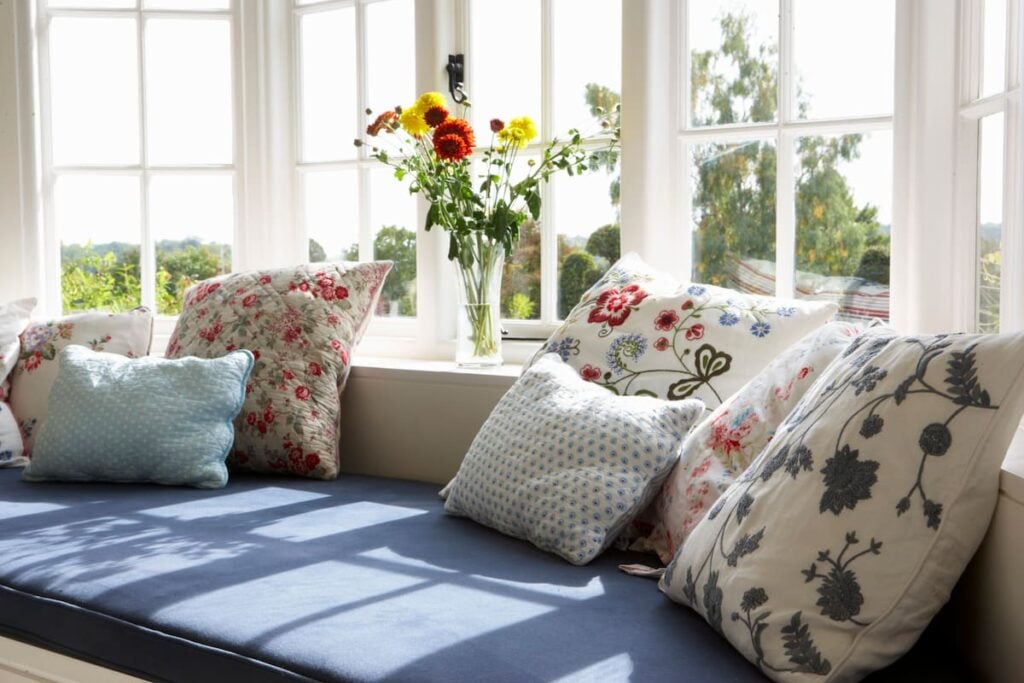
A window seat with storage underneath. You get seating, a view and a home for cushions and throws in one move. One option is to build it the full width of the wall, so it reads as part of the room. If you don’t want to lose floor space, keep it smaller and raise it up on legs for an airy feel.
A half-height partition of open shelving. If you have a longer building, this can divide it into two zones without blocking light.
Shelving or hooks above the door. The perfect place to store seasonal items or thing you don’t always need at hand.
A foldable work surface. A sturdy work surface, that folds down against the wall, turns a tiny she shed into a genuinely usable studio. Add a stool that you can place in the corner when you need more floor space. If you’re planning for a longer work surface where two people can work or craft side-by-side, get stools that stack on top of each other.
For more on planning the inside, look for additional inspiration on summer house interior design ideas.
Four interior design directions
Shabby chic. This style has aged well, largely because it isn’t about buying a set of things. It’s a way of putting a room together from pieces that already have some history.
Scandinavian simplicity. Leave the walls bare or whitewashed, pair with a pale wood floor, one sheepskin, one plant, and your main furniture piece(s). This is the lowest-effort route to a room that stays calm.
Botanical. Darker stained walls, terracotta pots, dried flowers on a rail, seagrass matting, a wicker chair. It suits a building that’s half potting shed and half sitting room.
Colour-led. One bold wall colour (just not too bright!), patterned vinyl or floor tiles, and some beautiful artwork to complement the style. A garden building can be the one place you commit to a colour if you’re scared of doing so in the main house.
Another approach, which you might often see on inspiration boards, is a fully painted interior in pastel pink or green. If that style seems appealing to you, feel free to go all in! But, if you’re not quite sure, spend some time in a similarly coloured space, if you can (like a showroom or cafe) to see if it’s your cup of tea. Some people find it energising, others feel drained. If you’re in the latter group, add colour via curtains, throws, pillows, desk covers and other accessories – they are easy to swap out based on your mood.
Walls, floors, ceiling: painting and staining
You have three main options to choose from, depending on the look you’re after. An important thing to always remember is to treat the timber as soon as your garden building is installed. Wood has no protection against the elements on its own.
Leave it bare and treat it. The grain and the horizontal lines add warmth that painted plasterboard just can’t deliver. A clear or lightly tinted interior wood treatment protects it and keeps the colour from yellowing.
Whitewash or stain. Thinned paint or a wood protector with stain lets the grain show through while lifting the room considerably. This approach suits shabby chic and Scandinavian schemes very well.
Solid paint. Full coverage gives you a contemporary finish, though you’ll lose the timber character.
For floors, timber, good quality vinyl planks and seagrass or sisal matting all perform well. Whatever you choose, a large rug over it will improve warmth, acoustics and appearance.
Light, power and comfort
To take full advantage of the natural light, don’t overdo it with the curtains. Blinds are often a better fit than curtains in a small building because they don’t eat wall space, and our summer house blinds guide covers the practical options.
For artificial light, avoid the single central pendant. Two-three sources at different heights give you a room with different moods. Get a pendant or flush fitting for general light, a floor or table lamp beside the chair, and a task light for where you work. Rechargeable fittings have improved enormously if you’d rather not run a supply. If you are adding mains electricity, the work needs to be done by a qualified electrician and needs to be notified under the Building Regulations, so it’s worth deciding early.
Insulation of walls, floor and roof extends the months you’ll actually use the building, reduces condensation and keeps you warm. Ventilation keeps the air moving, which protects both the timber and anything textile you store in the garden room. Keeping the exterior maintained protects the inside too, our wood treatment for a summer house guide covers the schedule.
Frequently asked questions
Treat or paint the timber walls, lay a floor covering you’d be happy with indoors, use two or three light sources, and get storage off the floor and onto the walls. Use a cohesive colour scheme and style and you’ll have a lovely shed that you enjoy spending time in.
Around 6 to 9 square metres is enough for reading, crafts or a small desk. Ten to fifteen square metres gives you room for a seating area plus a working area, or a proper studio bench. Sizes and layouts vary across our summer houses and garden rooms ranges.
Rules on overnight use vary by council. If that’s something you’re considering, check with your council before you build. Our planning permission guide sets out the general rules.
Find some comfortable seating, a display or work surface, shallow shelving and layered lighting. Throw in a rug for wamth and a mirror to make the space seem larger.
Insulate the walls, floor and roof and draught-proof around doors and windows. A small electric heater should be enough for a small shed.
Categories:
Guides
If you’re looking for a budget garden room, there may be quite a few different options available to you. There’s garden rooms built from repurposed materials, cheap kits (that don’t last very long) or a full DIY build from scratch, for example. Which of these is the right choice for you, depends on a few…
Tiny homes have gone from a niche idea to a regular fixture of UK property feeds, TV and Instagram. The appeal is easy to see: lower bills, less stuff, a smaller footprint and a building you can understand from end to end. The reality in the UK is more complicated. Planning law has no category…
Are you wondering what is the purpose of a sauna hat? The first time you see someone walk into a sauna wearing a felt hat, it can frankly look silly. Something you’d buy at a Christmas market and never wear again. Then you sit on the top bench for ten minutes without one, feel the…

Your own sauna and cold plunge at home make for a real treat any time of the year. While most garden buildings find less use in winter, saunas still earn their keep and it’s not hard to see why. When it’s cold and dark outside, the better that first wave of heat feels. In Finland…
Want to discuss over phone. Let us call back to you
If you need any additional info regarding any product, please fill in the below form and we will get back to you, usually the same or next working day.
Have any questions regarding some product?
If you need any additional info regarding any product, please send us your questions.