



Sauna and Cold Plunge at Home: A Winter Guide for UK Gardens
Published: 02.11.2026 / Last updated: 02.11.2026
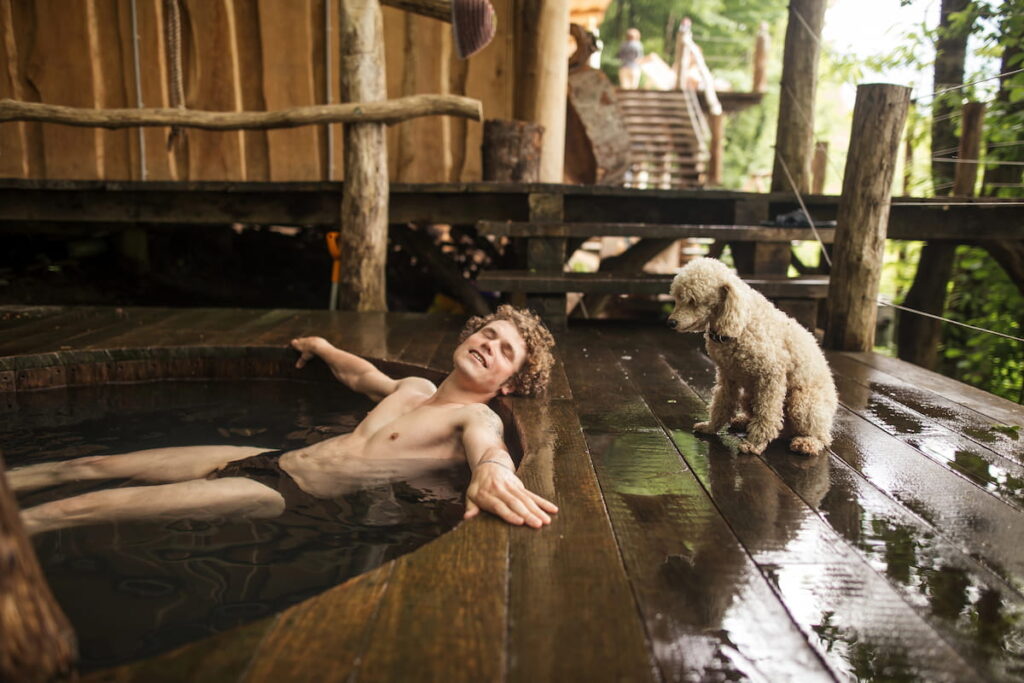
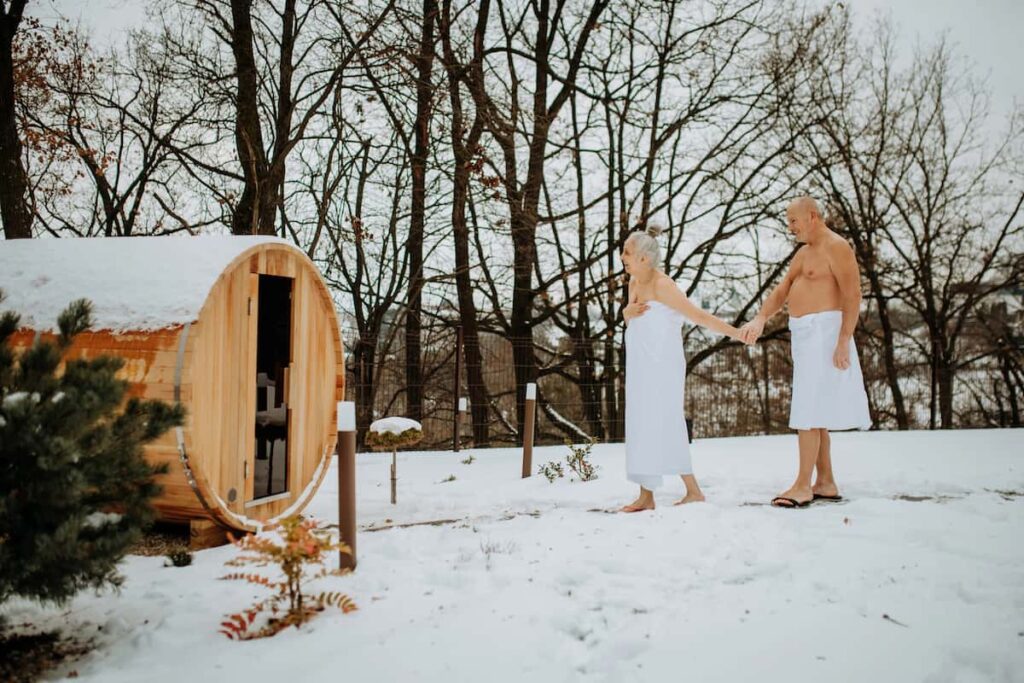
Your own sauna and cold plunge at home make for a real treat any time of the year. While most garden buildings find less use in winter, saunas still earn their keep and it’s not hard to see why.
When it’s cold and dark outside, the better that first wave of heat feels. In Finland and Estonia, countries with traditional sauna culture, you’d follow that with a dip in a cold pond or lake. In a British garden it is more likely a plunge tub, a cold shower or even a hosepipe you have been meaning to lag.
This guide covers how to run a sauna and cold plunge at home through the winter months: how hot, how long, what to plunge into, and how to keep the sauna itself in good shape until spring.
Quick answer: For a home sauna and cold plunge, heat the sauna to 70–90°C and stay in for 10–15 minutes (or however long feels comfortable). Then cool off for 1–3 minutes in water around 10–15°C, or under a cold shower, and rest before the next round. Two or three rounds is plenty. Build up the cold slowly, and skip it if you have a heart condition without checking with your GP first.
An important takeaway is that the sauna is somewhere you go to relax. Sauna bathing shouldn’t feel like a strict protocol (even if you’re following one) or a goal to complete. The start of a sauna session is practically a ritual – you shut the door to the world, any problems or worries you may have and simply enjoy the enveloping heat and the refreshing cooldown after.
Shut the door, switch off, warm up. Find the sauna that fits your garden.
Join hundreds of 5-star reviews • Designed by sauna specialists • Expert advice at every step


Sauna and cold plunge: what is contrast therapy?
Contrast therapy means moving between heat and cold on purpose, usually several times in one session. A sauna and cold plunge is the most familiar version: you heat up properly, cool down quickly, rest, and repeat.
It sounds like a wellness trend, and in all fairness – it is now sold as one. In the Nordic countries and the Baltics it is simply what you do on a Saturday evening, and has been so for countless generations.
Why winter is one of the best times to use your sauna
Winter is when a garden sauna earns its place. On a cold night the contrast is sharper, the cool-down takes care of itself, and there is something quietly satisfying about sitting at 80°C while the frost settles on the lawn outside.
There is a practical side too. Long dark evenings leave fewer reasons to be outdoors, and a sauna gives you one. A 20-metre walk down the garden in a dressing gown is not much of a commute, but it does feel like going somewhere.
How long does a sauna take to heat up in winter?
The Tylö Sense Sport 6 and 8 heaters Summerhouse24 supplies take around 25-45 minutes to reach temperature. In winter, expect the longer end of that range, and a little more on a hard frost. The cold air, walls and stones all have to warm up together, so allow more time than you would in July.
- Electric heaters are the easier option on a weeknight. Many can be set on a timer, so the sauna is warm by the time you have finished dinner.
- Wood-fired stoves take a little longer and need attention while they get going, but give a softer, more traditional heat. Keep your logs under cover – damp wood smokes, spits and heats badly.
If you are still deciding between the two, our guide to electric or wood-fired saunas sets out the running costs and trade-offs side by side.
How hot should a sauna be?
A traditional Finnish-style sauna usually runs at 70–90°C. If you are new to it, 60–70°C is a comfortable place to start. Temperature is not a competition, and the hottest bench is not automatically the best one.
Humidity matters as much as the number on the thermometer. Ladling water onto the hot stones releases a burst of steam, called löyly in Finnish and leil in Estonian, which makes the air feel far hotter for a minute or two. A few ladles per round is enough.
How long should you stay in a sauna?
Most people find 10–15 minutes per round about right, and beginners may want to start at 5–8. The better guide is your own body: leave when you feel properly warm through, not when you feel light-headed or uncomfortable.
A typical home session is two or three rounds of sauna and cold, with a few minutes’ rest between each. That adds up to about an hour, including heat-up time you can spend doing something else.
Your cold plunge options at home
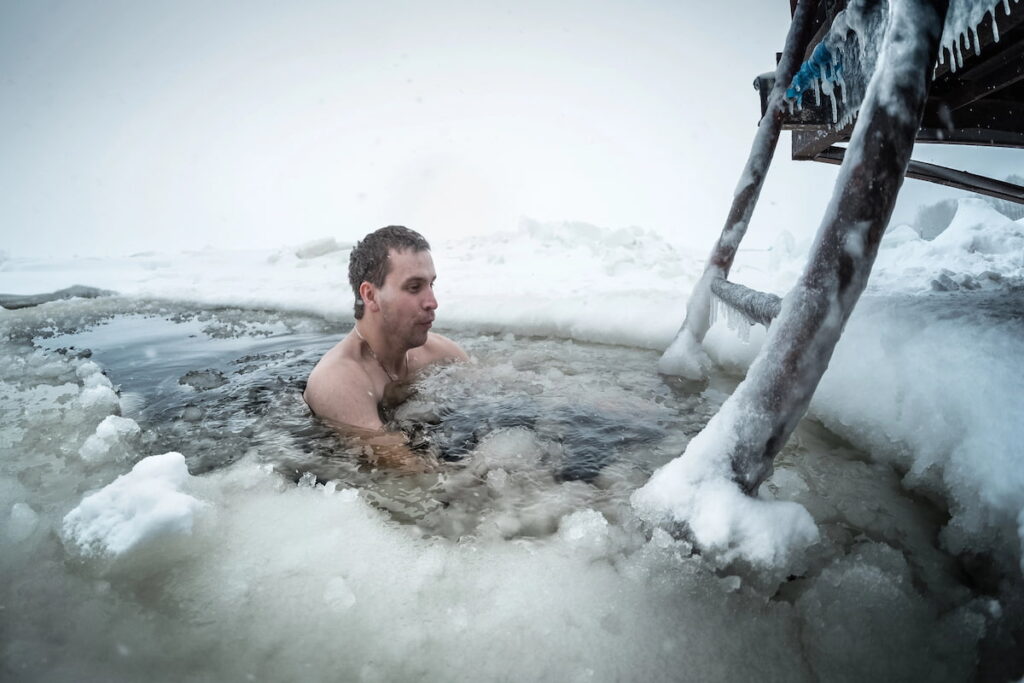
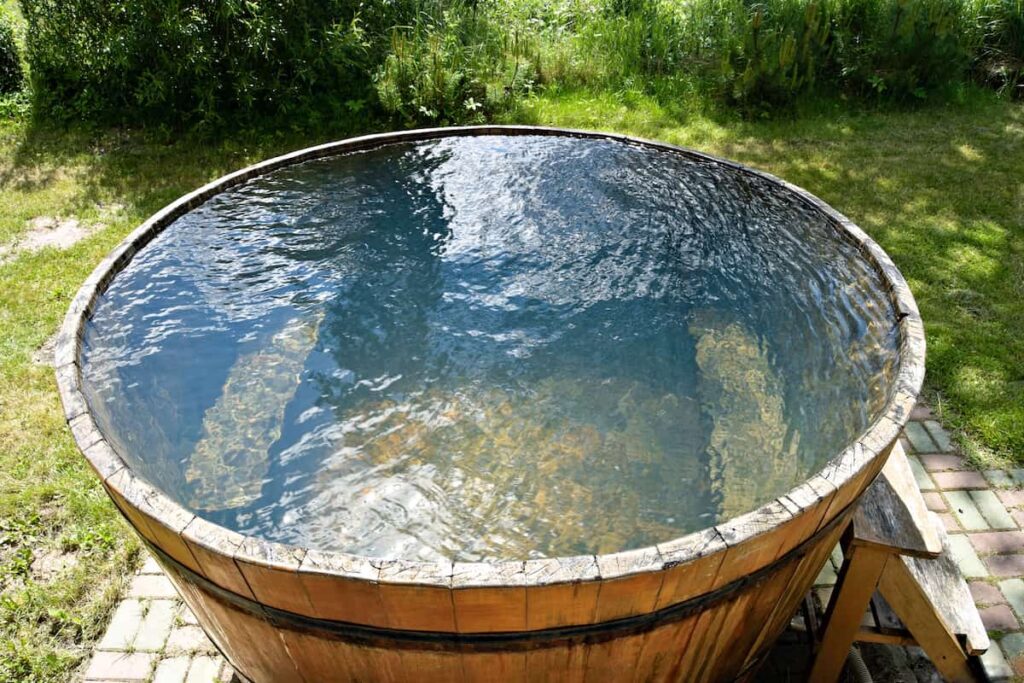
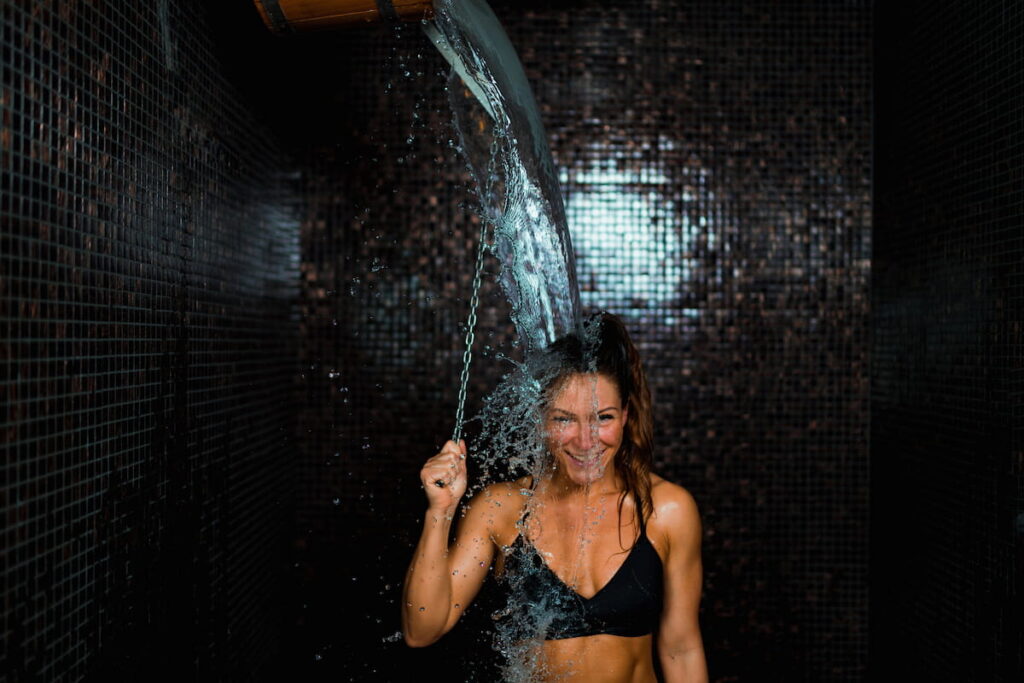
You don’t need a lake or a pond to do your cold plunge after sauna. But if you do have access to a natural body of water, by all means, take advantage of it!
All you really need is cold water, any way you can access it.
A dedicated plunge tub. Purpose-made cold tubs range from simple insulated barrels to chilled, filtered units. In a British winter, an unpowered tub filled from the hose will often sit at 5–10°C without any help. Fit a lid to keep leaves and frost out.
A cold shower. The simplest version, and easier to control. An outdoor shower beside the sauna works well, though the pipework needs insulating or draining down before the first hard frost. If your sauna has a shower room, it’s a convenient option.
Is a cold shower after the sauna as good as a plunge?
A cold shower after the sauna cools you more gently than a full plunge, because only part of your body is in cold water at once. That makes it a sensible way to start. Many people never move beyond it and are quite happy.
A bucket of water. The Estonian countryside method. Fill it before you go in, tip it over your head when you come out. Low-tech, and alarmingly effective.
Snow. Rolling in fresh snow or rubbing it on your body is traditional in the Nordic countries. In most of the UK you will get the chance about once every few years, so make the most of it when it comes.
Choosing a sauna with room for a plunge
If you are planning a sauna with cold plunging in mind, a terrace or partially covered veranda makes winter sessions much easier. It gives you a dry, level spot for a plunge tub or bucket right by the door. You also get somewhere sheltered to cool down between rounds, and you don’t have to cross frozen paving in bare feet.
Here are three sauna models that have a veranda included:


From left to right:
- Oliver II – a 6x2m sauna cabin with a terrace and three rooms, including a changing space.
- Geira – a modern 5x2m thermowood sauna with a partially covered veranda.
- Nord – a modern 5x2m thermowood sauna with a partially covered veranda and a flat roof.
Whichever you choose, measure the covered area against the plunge tub you have in mind before you order. If you prefer one of our other sauna models, but would like a canopy or terrace added, you can request a bespoke design.
-
SKU G0208
Sauna Cabin with Terrace Oliver II 11m² | 70mm | 6 x 2 m
£10,450.0011m270mm598x402 cmBlack Friday! Extra -£1,000 at checkout
-
SALESKU G0424
Modern outdoor sauna "Nord" 5 x 2 m | 40mm (thermowood)
Original price was: £9,690.00.£7,675.00Current price is: £7,675.00.4.7m240mm496x205 cmBlack Friday! Extra -£500 at checkout
-
SALESKU G0423
Modern outdoor sauna "Geira" 5 x 2 m | 40mm (thermowood)
Original price was: £10,420.00.£7,750.00Current price is: £7,750.00.4.7m240mm496x205 cmBlack Friday! Extra -£500 at checkout
How to do a sauna and cold plunge session
Sauna first, then cold – that is the order for almost everyone. A simple routine for a winter evening:
- Shower and dry off before your first round, so you warm up faster.
- Sit in the sauna for 10–15 minutes, adding steam once or twice.
- Step out and cool down: 1–3 minutes in the plunge, or 30 seconds to 2 minutes under a cold shower.
- Rest for 5–10 minutes. Wrap up, sit down, and drink some water.
- Repeat for two or three rounds in total.
Some people like to finish on cold. Danish researcher Susanna Søberg, who has studied cold and heat exposure, suggests ending with cold so your body has to rewarm itself. Others prefer a final warm round before bed. Try both and see which suits you.
What are the benefits of a sauna and cold plunge?
The benefits most people notice are simple ones: feeling relaxed, sleeping well afterwards, and feeling warm for hours on a cold evening. Many also describe the cold as an instant reset, which is hard to argue with when you are standing in a tub of 8°C water.
Research, much of it from Finland, has linked regular sauna use with better heart and circulation health. Most of those studies are observational, though, and the evidence on cold plunging is thinner. The honest summary is that a sauna and cold plunge routine is good for winding down, and may do more – but it is not a cure for anything.
Staying safe in the cold
Cold water is the part to respect. The first minute brings a sharp gasp and fast breathing, known as cold water shock. Lower yourself in slowly, keep your head above water, and focus on slowing your breath before you do anything else.
- Build up gradually: start with a cold shower or a short dip, and increase over weeks rather than days.
- Never plunge alone when you are starting out.
- Avoid alcohol before and during a session.
- Drink water between rounds.
- If you have a heart condition, high or low blood pressure, or are pregnant, check with your GP before using a sauna or cold water.
- Never use a frozen pond or open water at home as a plunge.
Looking after your sauna through the winter
A well-built sauna copes with winter without much fuss, but a few habits help it stay dry and sound until spring.
Dry it out after every use. Leave the door and vents open once you are done, so moisture escapes rather than settling into the timber. Avoid placing objects in front of the vents or openings intended for air exchange. Your chosen sauna will have instructions on how to handle maintenance.
Clear heavy snow and leaves from the roof. Barrel saunas shed snow well thanks to their curve. Flatter roofs may need a soft brush after a heavy fall. Make sure to also brush away any snow or leaves blocking vent openings.
Protect the water supply. Drain or lag outdoor taps and shower pipework before the first frost.
Keep the path lit and gritted. Wet bare feet and frozen paving are a bad combination. A few solar or low-voltage lights along the path make winter sessions much more pleasant.
Check the stove or heater. Sweep a wood-burner’s flue before the season starts. For electric heaters, rearrange or replace cracked stones so the air can flow between them.
Plan exterior treatment for spring. Avoid treating the outside in freezing or damp weather. A dry spell in spring is the time for it.
Frequently asked questions
Two to four sessions a week is common among regular users, and many Finns use theirs most days. With your own sauna in the garden, the best routine is the one you will actually keep up through January.
Sauna first. Warming up first makes the cold far easier to tolerate and gives you something to cool down from. Going cold first is uncomfortable and doesn’t do much.
Yes – winter is when most outdoor saunas get the most use. A well-insulated cabin with a properly sized heater will reach temperature in sub-zero weather. It just takes longer, so allow for a slower warm-up.
Around 10–15°C is cold enough to feel the effect and manageable for most beginners. Colder water works too, but shorten your time in it. In a UK winter, an outdoor tub will often be colder than that on its own.
If you will use it through the colder months, yes. A British winter is long, damp and dark, which is exactly when a sauna is most welcome. Our breakdown of the cost to build an outdoor sauna in the UK covers the buying, installation and running costs, and our comparison of traditional Finnish saunas and sauna kits explains the main options.
No. A small 2x2m garden sauna fits two to four adults, and a plunge tub or outdoor shower needs only a couple of square metres beside it.
Planning a sauna for next winter?
If this guide has you looking at the corner of your garden, now is a good time to start. Ordering over the winter means your sauna can be installed in spring and ready long before the evenings draw in again. If cold plunging is part of the plan, look at the models with a terrace or veranda, which leave room for a tub right by the door. Browse our garden sauna cabins and outdoor saunas, or get in touch if you would like help choosing.


Categories:
Guides
Tiny homes have gone from a niche idea to a regular fixture of UK property feeds, TV and Instagram. The appeal is easy to see: lower bills, less stuff, a smaller footprint and a building you can understand from end to end. The reality in the UK is more complicated. Planning law has no category…
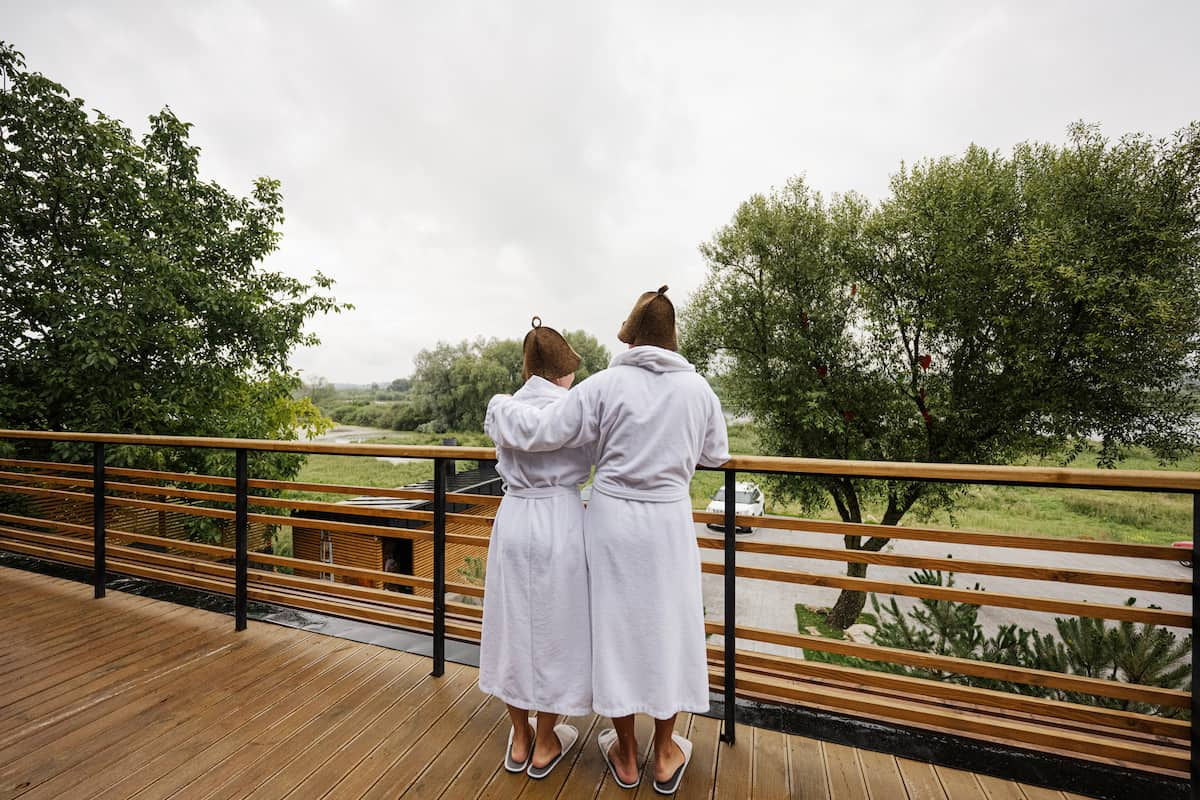
Are you wondering what is the purpose of a sauna hat? The first time you see someone walk into a sauna wearing a felt hat, it can frankly look silly. Something you’d buy at a Christmas market and never wear again. Then you sit on the top bench for ten minutes without one, feel the…
You’ve seen enclosure kits priced at over £1,000, you’ve priced the materials at a fraction of that, and building one looks like an obvious win. Sometimes it is. But the people who’ve actually done it keep describing the same few problems, and none of them is the frame. We build golf rooms, not enclosures, so…
If you’re looking for a golf simulator dimensions guide, we’ve got you covered. Once you’ve measured the garage, or paced out the bottom of the garden, and you’ve got a number. The space measurements dictate which launch monitor you can put in the room. A space that suits a camera-based unit may be too shallow…
Want to discuss over phone. Let us call back to you
If you need any additional info regarding any product, please fill in the below form and we will get back to you, usually the same or next working day.
Have any questions regarding some product?
If you need any additional info regarding any product, please send us your questions.